HomeGuides › Get Married in Spain as a Foreigner

How to Get Married in Spain as a Foreigner — Civil & Religious Routes

The full process for British, American, Irish and other international couples — civil weddings at the Registro Civil, Catholic church ceremonies, consular weddings, document requirements, the publicidad bans period and realistic timelines.

Get a Family Health Insurance Quote WhatsApp Our Team
DGSFP RegisteredEnglish-Speaking7 Days a Week

Getting Married in Spain — What Foreigners Need to Know

Spain is one of the most popular destinations in Europe for international weddings — the sunshine, the venues, and the romance of marrying somewhere meaningful. But the legal side is significantly more bureaucratic than the average UK or US registry office wedding, and many couples underestimate how long it takes.

Foreigners can marry in Spain through three main legal routes: a civil ceremony at the Registro Civil or local town hall, a religious ceremony (most commonly Catholic, but Anglican, Jewish, Muslim and Evangelical are also recognised), or a consular wedding at your country's embassy (limited and not available to all nationalities). The framework sits in the Spanish Civil Code and the Ley 20/2011 del Registro Civil .

Official information is published by the Ministerio de Justicia — Matrimonio and the Registro Civil portal . UK citizens should also consult GOV.UK — Getting married in Spain , and US citizens the US State Department travel pages .

2 Years' ResidencyAt least one spouse must usually be registered on the padrón for 2 years for a civil wedding
4–9 MonthsTypical end-to-end timeline including paperwork, banís and ceremony slot
Apostille RequiredAll foreign documents need The Hague Apostille and a sworn Spanish translation
Bans PeriodPublicidad (banns) posted for 15 days at the Registro Civil before approval

The 6 Things Every Foreign Couple Needs to Understand

Spanish marriage law looks straightforward on paper but the paperwork, residency requirement and banís period catch most international couples off guard. Here is what actually matters.

Civil vs. Religious vs. Consular

A civil ceremony at the Registro Civil or town hall is the most common route. A Catholic church wedding is legally recognised but requires a separate expediente. Some embassies (US, for example) allow consular ceremonies; the UK does not perform consular marriages in Spain.

The Expediente Matrimonial

Before any wedding can take place, you must open a marriage file (expediente matrimonial) at the Registro Civil. This is the legal vetting stage — identity, capacity to marry, no existing marriage — and it takes months, not weeks.

Padrón & Residency Requirement

At least one of you usually needs to have been registered on the padrón municipal for 2 years in the town where you want to marry. Non-residents typically cannot marry at the Registro Civil unless this is satisfied.

Certificate of No Impediment

UK citizens need a Certificate of No Impediment (CNI) issued by their local UK register office after 28 days of public notice. US citizens use a sworn affidavit (Declaration Jurada de Libertad de Estado) signed at a US consulate.

Bans (Publicidad) Period

Once the expediente is accepted, the Registro Civil posts your edicto (banns) for 15 days. This is a formal public notice giving anyone with a legal objection the chance to raise it. Only after this can the wedding be authorised.

Inscription in the Registro Civil

The wedding only counts in Spain — and the UK/US — once it is registered (inscripción) in the Registro Civil. The Libro de Familia or marriage certificate is your proof. You will need it for visas, pensions and tax.

Documents You Will Need (Civil Wedding at the Registro Civil)

Document lists vary by Registro Civil — some demand more than others — but this is the universal core. Every foreign document needs The Hague Apostille (or consular legalisation if your country is not in the Apostille Convention) and a sworn Spanish translation from a traductor jurado registered with the Ministerio de Asuntos Exteriores .

  • Valid passport (both spouses): Original plus a clear photocopy of the photo page. Spanish residents also bring TIE/NIE card.
  • Full birth certificate — issued within the last 6 months: Long-form birth certificate, apostilled and translated. Spanish authorities will reject anything older than 6 months on the wedding date.
  • Certificate of No Impediment (CNI) — UK citizens: Obtained from your UK register office after 28 days of public notice. Apostilled by the FCDO Legalisation Office and sworn-translated.
  • Affidavit of Single Status — US citizens: A Declaration Jurada de Libertad de Estado signed at the nearest US consulate (Madrid or Barcelona). Then apostilled and translated.
  • Certificado de empadronamiento: Issued in the last 3 months, showing at least 2 years' residency in the municipality (one spouse minimum). Get it from the ayuntamiento.
  • Volante de empadronamiento histórico: Some Registros Civiles also want the historical version showing your full Spanish address history.
  • Decree absolute / divorce decree (if previously married): Plus a certified marriage certificate of the previous marriage. Both apostilled and translated. Spanish law requires proof you are free to marry.
  • Death certificate of previous spouse (if widowed): Apostilled and translated.
  • Witnesses (testigos): Two adults with valid ID on the day of the ceremony. They do not need to be Spanish nationals or residents.
  • Solicitud de matrimonio: The standard Registro Civil application form, signed by both parties in person.

The Step-by-Step Process — Civil Wedding

Most international couples follow this exact path. Allow 6–9 months from first appointment to ceremony, longer in busy coastal Registros Civiles like Málaga, Alicante and Palma.

  • Step 1 — Confirm residency: Make sure at least one of you has been on the padrón for 2 years in the municipality where you want to marry. If not, marry in the municipality where you do qualify.
  • Step 2 — Gather documents: Start ordering birth certificates, CNI/affidavit and apostilles. Allow 8–12 weeks for UK CNIs and apostilles, longer if you live abroad.
  • Step 3 — Sworn translation: Every foreign document needs translating by a traductor jurado. Budget €30–€60 per document.
  • Step 4 — Open the expediente: Request an appointment at your Registro Civil. At the appointment, both spouses attend in person with all originals and translations. The civil servant will check documents and ask basic questions.
  • Step 5 — Interview (audiencia reservada): Some Registros Civiles — especially where one spouse is a non-EU national — hold a separate interview with each spouse to confirm the marriage is genuine and not for immigration purposes.
  • Step 6 — Publicidad / banís: If your file is approved, the Registro Civil posts your edicto for 15 days. In some cases the banís can be dispensed with on request.
  • Step 7 — Authorisation auto: A judge or registrar signs the auto approving the marriage. This authorisation is usually valid for one year — you must marry within that window.
  • Step 8 — The ceremony: Hold the ceremony at the Registro Civil, town hall, an authorised notary, or a permitted venue. Two witnesses sign the marriage record.
  • Step 9 — Inscription & Libro de Familia: The marriage is registered. You collect your marriage certificate (certificado literal de matrimonio) and Libro de Familia, which you will use for visas, banking and pensions.
  • Step 10 — Register back home: UK citizens do not need to register a foreign marriage with the GRO but should keep apostilled copies. US citizens can record the marriage with their home state but it is not legally required.

Religious & Consular Routes — What's Different

Civil marriage is the default for foreigners, but religious and consular ceremonies have their own rules. Both still require the same underlying capacity-to-marry checks.

  • Catholic church wedding: Legally recognised in Spain (matrimonio canónico). You will need baptism certificates, confirmation certificates, a pre-marital course (cursillo prematrimonial) and an ecclesiastical expediente from your parish. The civil documents (birth certs, CNI, padrón) are still required and are processed through the diocesan tribunal rather than the Registro Civil.
  • Anglican, Evangelical, Jewish, Muslim: Spain recognises marriages performed by religious bodies that have signed cooperation agreements with the state. The civil expediente is still opened first; the religious ceremony then has civil effect once registered.
  • US consular weddings: The US embassy in Madrid does not perform marriages, but US citizens can swear the affidavit of single status there. See U.S. Embassy Madrid .
  • UK consular weddings: The British Embassy does not perform marriages in Spain. UK citizens must use the civil or religious route. The CNI is issued by your local UK register office, not the embassy.
  • Notarial weddings: Since 2015 (Ley de Jurisdicción Voluntaria) Spanish notaries can also celebrate civil marriages, often quicker than waiting for a Registro Civil slot. The expediente is still required upfront.
  • Symbolic / venue ceremonies: A blessing on a Marbella beach or in a Mallorca finca has zero legal effect. Many couples do the legal civil bit quickly and the symbolic event with friends and family separately — perfectly normal.

Post-Brexit — UK-Specific Points

Since 1 January 2021 UK nationals are third-country nationals in Spain. The marriage process is the same in legal terms, but a few practical details have shifted.

  • CNI process unchanged: UK register offices still issue the Certificate of No Impediment for marriages in Spain after a 28-day public notice period. Book the appointment early — some offices are weeks behind.
  • FCDO Legalisation Office: Apostille your CNI and UK birth certificate through the FCDO Legalisation Office . Standard service is around 2 weeks plus postage; premium next-day is available in London.
  • Residency proof for marrying in Spain: If you are on a TIE (Withdrawal Agreement or non-lucrative), use that plus your padrón. If you are a tourist on a 90/180 Schengen visa, you generally cannot marry at the Registro Civil — the residency requirement blocks it.
  • UK divorce decrees: Decree absolutes need apostille and sworn translation. Older decrees may also need a court certificate of finality if the decree itself does not state it.
  • UK General Register Office (GRO): Foreign marriages by UK nationals are not automatically registered in the UK. You can deposit a certified copy at the GRO for the record, but it is optional. Your Spanish marriage certificate is fully valid in the UK.
  • Name change in the UK: Spanish marriages do not change your name automatically — Spain doesn't change names on marriage at all. To update a UK passport or driving licence, use a deed poll or the Spanish marriage certificate.

6 Costly Mistakes Foreign Couples Make

These are the issues that delay weddings or, worse, void them. Almost all of them are avoidable with planning.

  • Booking the venue before opening the expediente: Couples book a finca for July, then discover the Registro Civil cannot process them in time. Always start the legal paperwork first.
  • Letting documents go stale: Birth certificates and CNIs are only accepted within 6 months of issue. If your file drags on, you may have to re-order them.
  • Missing the padrón requirement: Tourists and recent arrivals cannot marry at the Registro Civil. Either wait, marry elsewhere, or use a notarial route where one party qualifies.
  • Non-sworn translation: A friend's translation, even a perfect one, will be rejected. Only translations stamped by a traductor jurado are accepted by Spanish authorities.
  • Ignoring divorce paperwork: If either spouse was previously married, the Spanish authorities will not move until they see the apostilled, translated divorce decree. Recognition of foreign divorces is governed by Tribunal Supremo case law on impedimentos and EU regulations.
  • Forgetting to update everything after: Banks, insurers, padrón, hacienda, Social Security — nothing updates automatically. Your tax status (joint vs. individual), health cover and pension rights all hinge on registered civil status.

Why Newly-Wed Expats Choose 247 Expat Insurance

A Spanish wedding changes the shape of your insurance overnight — family health cover, joint home contents, life policies. We help you build the right cover the moment your civil status changes.

DGSFP Registered

Fully authorised by Spain's insurance regulator, the Dirección General de Seguros y Fondos de Pensiones.

Family Health Cover

Add a new spouse to your existing policy or build a joint family plan covering maternity, dental and worldwide travel.

Joint Home Insurance

Two names on the escritura means two names on the policy. We update the policy holder structure correctly so claims pay out.

English-Speaking Team

Policy wording, claims and renewals all handled in plain English by people who actually live in Spain.

7 Days a Week

We answer when you need us — weekends and bank holidays included. New marriages don't wait for Monday.

Visa-Compliant Cover

If your spouse needs an NLV or family-reunification visa, we provide private health policies that meet every consulate's checklist.

Getting Married in Spain — Frequently Asked Questions

Can two foreigners marry in Spain if neither of us lives here?
In most cases, no — the Registro Civil requires at least one spouse to be registered on the local padrón for 2 years. The standard alternatives are to (1) come to Spain on a non-lucrative visa and build up residency, (2) marry in a country with looser residency rules and have the marriage recognised in Spain, or (3) use a religious route where the church does not impose the same residency rule, although the underlying civil registration still applies.
How long does the whole process take?
Realistically 6–9 months. Document gathering (CNI, apostille, sworn translation) takes 2–3 months. The Registro Civil expediente, audience and banís typically add another 3–5 months. Coastal areas like Málaga, Marbella, Palma and Alicante are slowest — allow up to 12 months. Notarial routes can be quicker once the expediente is approved.
Do I have to convert to Catholicism for a church wedding?
No, but at least one spouse needs to be a baptised and confirmed Catholic. The non-Catholic spouse must agree that children of the marriage will be raised in the faith and the parish priest will guide both of you through the prematrimonial course. The civil paperwork (birth certs, CNI, padrón) is identical to a civil wedding.
Will our Spanish marriage be recognised in the UK / US / Ireland?
Yes. A marriage validly contracted in Spain is recognised in the UK, US, Ireland, Canada, Australia and across the EU. Your Spanish marriage certificate (certificado literal) with an apostille is sufficient legal proof. You do not have to re-register the marriage at home, although the UK GRO and several US states allow optional deposit of a certified copy.
What does it cost to get married in Spain?
The civil ceremony itself is free at the Registro Civil and most town halls. Notarial weddings cost €60–€200. The real cost is in documents: UK CNI (around £50), FCDO apostille (£30–£75 per document), Spanish sworn translations (€30–€60 per document) and any travel back to your home country. Budget €400–€800 in admin for a UK×UK couple, more for a UK×US or mixed-EU couple.
Can we marry in Spain on a tourist visa?
Not at the Registro Civil — the 2-year padrón requirement excludes tourists. You can hold a religious ceremony or a symbolic ceremony at any Spanish venue, but it will not have legal civil effect unless one of you qualifies for the residency rule. Most couples in this situation marry legally in their home country and hold the celebration in Spain.
Do I take my spouse's surname automatically?
No. Spain does not change anyone's name on marriage — Spaniards keep both parents' surnames for life. Your Spanish documents (TIE, padrón, marriage certificate) will continue to show your maiden/birth surname. To change your name on a UK passport or US driver's licence, you follow your home country's process — usually deed poll in the UK or court order in the US, using the Spanish marriage certificate as supporting evidence.
What happens to tax and pension after we marry?
Once married, you can elect tributación conjunta (joint taxation) on the Spanish IRPF if it is more favourable. Your spouse becomes your legal heir in the absence of a will (subject to Spain's forced heirship rules and any UK/US wills). Pension survivor rights, Social Security family cover and inheritance tax allowances all change — speak to a Spanish gestor to update your status with Hacienda and Seguridad Social.

Explore Our Other Expat Insurance Guides

Marriage in Spain changes more than your relationship status — it changes your insurance, your taxes and your residency rights. Make sure the rest of your cover is in order.

Family health insurance in Spain for expats

Health Insurance in Spain

Family policies, maternity cover, and visa-compliant plans for couples and dependants.

Read the guide ›

Joint home insurance in Spain for married expats

Home Insurance in Spain

Joint policies for couples buying property together — buildings, contents and liability.

Read the guide ›
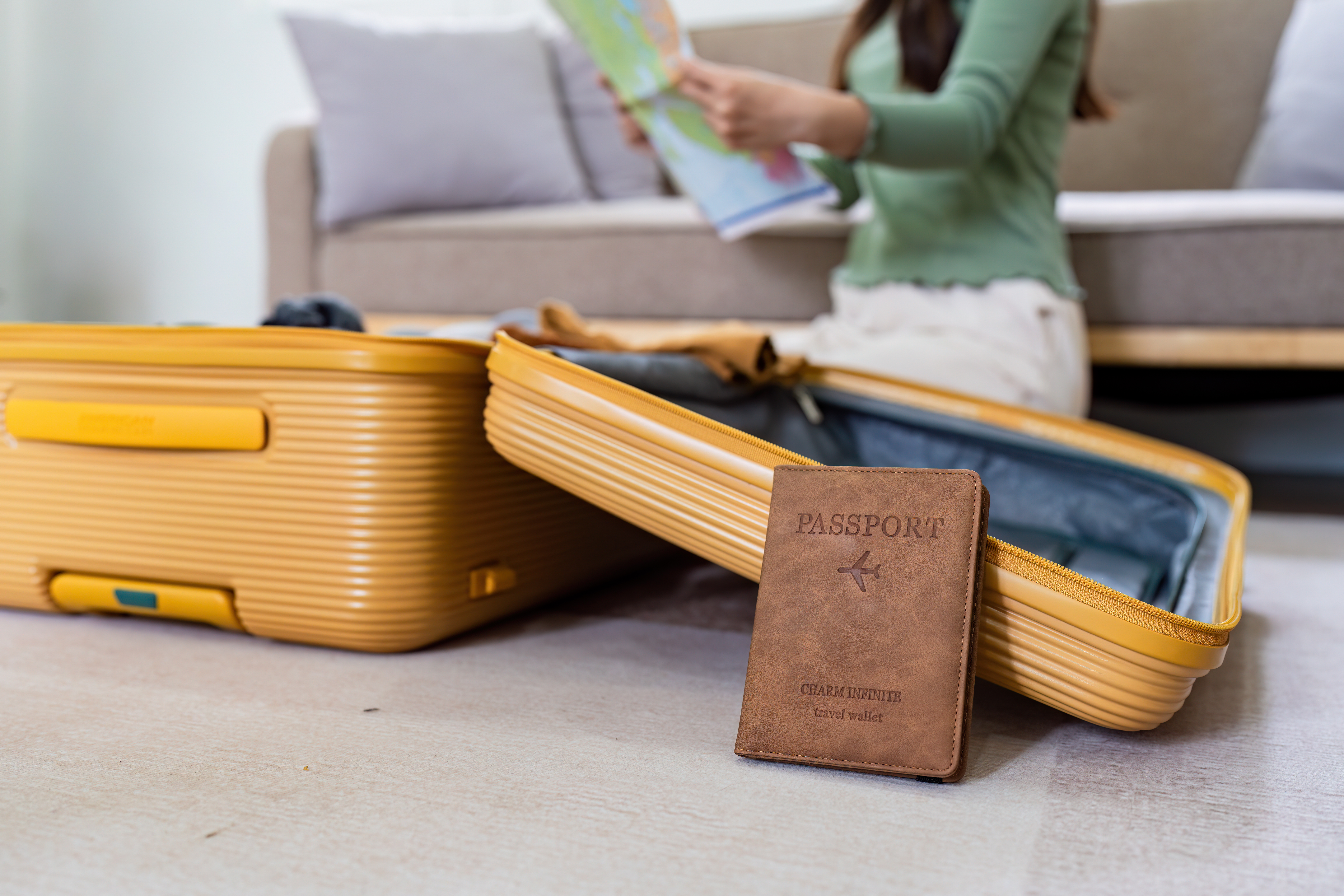
Travel insurance for couples in Spain

Travel Insurance for Expats

Honeymoon cover, family trips and travel back home — from your Spanish base.

Read the guide ›

Related Guides

Other essential reading if you are planning to settle, marry or start a family in Spain:

Just Married? Build a Family Policy That Actually Fits

From adding a spouse to your existing health plan, to insuring your joint home, to visa-compliant cover for an incoming partner — we'll compare the leading Spanish insurers and explain everything in English. DGSFP-registered, 7 days a week.

Get a Family Insurance Quote

Contact Us  |  WhatsApp +34 613 268 898