What the public SNS actually pays for, why 95% of Spanish dental work is private, what fillings, crowns and implants really cost, and how Caser and Sanitas dental policies stack up against paying cash at the clinic.
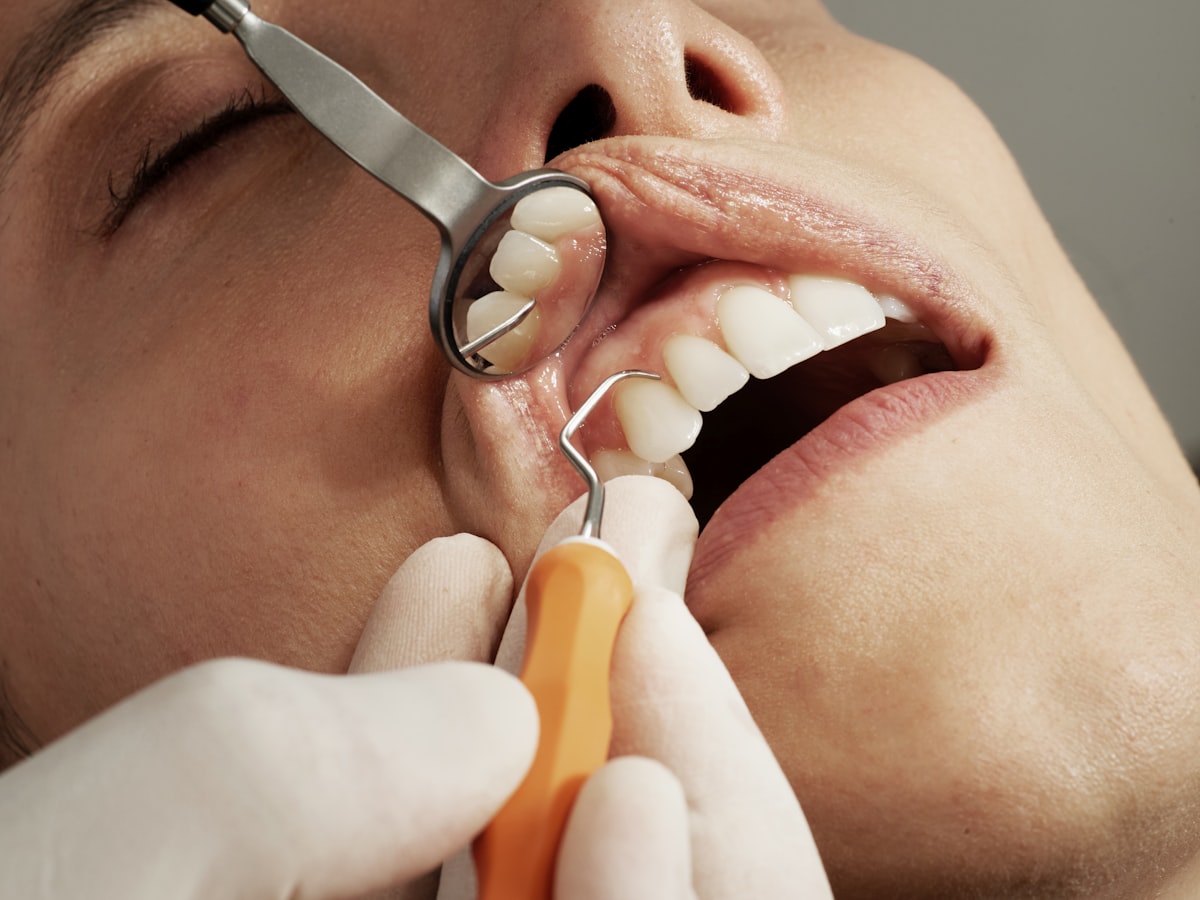
Dental care in Spain operates almost entirely outside the public health system. Although the Sistema Nacional de Salud (SNS) covers GP visits, hospital treatment and most specialist care free at the point of use, dentistry is a deliberate exception — confined by law to a very narrow basket of services for adults and a broader children's programme run by some autonomous communities.
The framework is set by Real Decreto 1030/2006 on the common portfolio of SNS services (BOE — texto consolidado), which lists buco-dental care as a specifically limited benefit. In practice, this means almost every adult expat in Spain will see a private dentist (dentista or odontólogo) for everything beyond an emergency extraction.
Spain has around 40,000 registered dentists in approximately 22,000 clinics, regulated by the Consejo General de Dentistas de España (consejodentistas.es) through 35 regional Colegios Oficiales de Odontólogos y Estomatólogos. Standards of training, equipment and infection control are high; clinics are usually small, independent or part of small regional groups, with newer cities also home to dental chains.
Under Real Decreto 1030/2006, the SNS guarantees only a minimal set of dental services to adults across all autonomous communities. Anything beyond this is paid privately, even if you are fully registered on the SNS with a TSI card.
The one significant public benefit is the children's programme. Most autonomous communities run a Programa de Atención Dental Infantil (PADI) or equivalent — País Vasco launched the original PADI in 1990 and others followed. Coverage varies by region but typically includes:
Treatment is delivered by participating private dentists who claim the fee from the regional health service. Parents register their child once and can use any participating odontólogo concertado. Orthodontics is almost never included.
Industry estimates and Consejo General de Dentistas reports consistently put the private share of Spanish dental expenditure at around 95%. In other words, the SNS funds only a small fraction of national dental spend — overwhelmingly extractions and the PADI children's programme. Everything else is paid by patients directly or through private insurance.
That has shaped the market in a particular way:
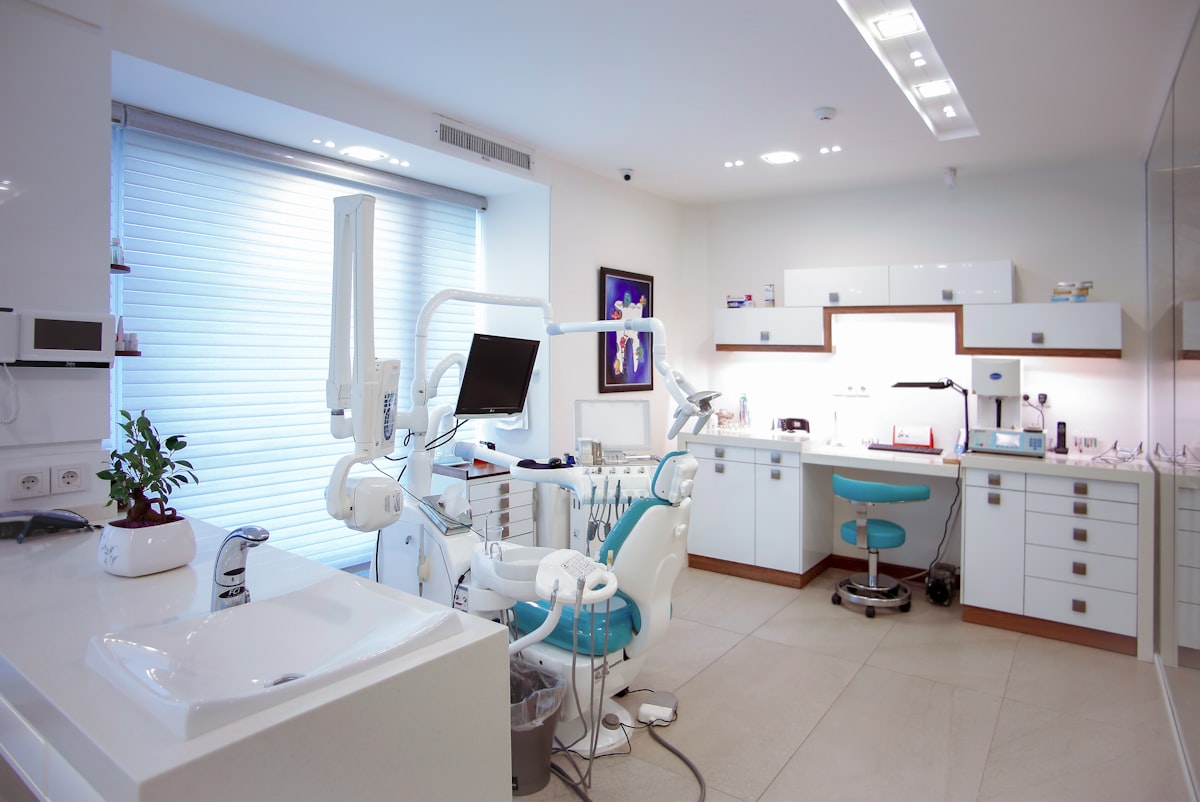
The market is split between independent neighbourhood clinics — usually run by the dentist-owner with one or two associates — and national or regional chains. Independent clinics tend to have a long-term relationship with each patient and higher continuity. Chains often advertise loss-leader cleanings or check-ups and recoup margin on implants and orthodontics; quality varies and the Consejo General de Dentistas has publicly raised concerns about aggressive commercial practices at some chains.
For most expats the best approach is to ask local residents, your insurer's directory, or your Colegio Oficial de Odontólogos for clinics with stable ownership and clear documentation.
Prices vary by region and clinic, but the table below gives realistic 2026 ranges for private dental treatment in Spain when paid in cash, without insurance. Madrid, Barcelona and the upper end of Costa del Sol tend to sit at the higher end; smaller cities and inland regions at the lower end.
| Treatment | Typical cash price range (€) | Notes |
|---|---|---|
| Initial consultation and X-ray | 0 – 50 | Many clinics offer free first visit and panoramic OPG. |
| Scale and polish (limpieza) | 40 – 80 | Typically 60. Recommended every 6–12 months. |
| Composite filling (one surface) | 50 – 90 | Larger or multi-surface fillings 80 – 150. |
| Root canal (endodoncia) — single root | 120 – 200 | Molar (3–4 roots) 250 – 400. |
| Porcelain crown (corona) | 400 – 700 | Around 600 is typical. Zirconia at the higher end. |
| Dental implant (post + crown) | 900 – 1,800 | Around 1,200 typical. Premium brands and full arch much higher. |
| Orthodontics — fixed braces (full) | 2,500 – 4,500 | Includes monthly reviews over 18–24 months. |
| Invisalign (clear aligners) | 3,500 – 6,000 | Depends on complexity and number of aligners. |
| Tooth whitening (in-clinic) | 200 – 400 | Take-home tray systems at the lower end. |
| Wisdom tooth extraction (surgical) | 100 – 250 | Simple extractions of other teeth 40 – 90. |
| Full upper or lower denture | 500 – 1,200 | Implant-supported overdentures considerably more. |
Spanish dental insurance is structured very differently from UK NHS dentistry or US-style dental HMOs. Most policies are "cuadro médico" — meaning routine and preventive work is free or near-free at clinics inside the insurer's network, while major treatments (crowns, implants, orthodontics) are charged at a discounted fixed tariff rather than fully reimbursed.
The maths is fairly simple. A stand-alone dental policy in Spain commonly costs around €10–€20 per person per month (€120–€240 a year). That is recovered in full from:
For families with children, the network tariff on orthodontics alone can save €1,000–€2,000 over the treatment.
If you are confident in your existing dentist, your teeth are healthy and your only annual cost is one cleaning and a check-up, cash is straightforward — perhaps €100 a year total. Dental insurance only helps if you actually use the network and the savings outweigh the premium.
Caser is one of the longest-established Spanish insurers and offers Caser Dental Familiar, a dedicated dental product widely sold to expat families. It is a network policy (cuadro odontológico) with a large clinic list across all 17 autonomous communities and a single national tariff for chargeable treatments.
Caser's dental network is strong across most regions including Madrid, Catalunya, Andalucía, Valencia, Murcia and the Balearic and Canary Islands. As with any cuadro-médico product, the value of the policy depends on whether your preferred clinic is in network — always check before signing up.
Sanitas (part of the international Bupa group) is a leading private medical insurer in Spain and runs a major insurer-owned dental network, Milenium Dental, with hundreds of clinics nationwide as well as a wider partner network. The dental product line is sold as Sanitas Dental with several tiers.
Sanitas Dental can be sold stand-alone or as an add-on to a Sanitas health policy. Bundling typically reduces the premium and gives you a single insurer for medical and dental — a meaningful administrative simplification for expat families.
Three small-print features make a real difference to whether a Spanish dental policy actually delivers value. Always check these before signing.
Most Spanish dental policies do not apply an overall annual euro limit like a US dental HMO. Instead, the policy publishes a price per treatment in the baremo (tariff schedule) and you can use as much or as little of it as you need — provided each treatment is clinically justified. Some premium tiers do apply a cap on out-of-network reimbursement (e.g. €500–€1,000 a year for treatments outside the cuadro).
Spanish dental cover typically includes a tiered waiting period for non-preventive work, designed to stop people taking out cover purely to fund a known major treatment:
Pre-existing dental problems may be excluded for treatment but covered for diagnosis. If you have an active issue (a broken tooth, planned implant, ongoing orthodontic case), declare it honestly — most insurers will still issue the policy but exclude that specific tooth or treatment for a defined period.
English-speaking dentists are common throughout coastal and capital expat areas. In most Costa del Sol, Costa Blanca, Mallorca and major-city clinics, at least one dentist or hygienist speaks fluent English; many advertise this on their websites.
In rural Castilla, Extremadura, Galicia interior, La Rioja and Aragón, English-speaking dentists are scarcer. A short Spanish phrase list and your translated treatment plan can solve most issues — but for complex implant or orthodontic work, an expat in inland Spain often travels to a coastal city or the regional capital.
Combine the regional PADI / children's dental programme with a low-cost family dental policy. The PADI handles fillings on permanent teeth and basic preventive work at no cost, while the family policy covers anything outside PADI — orthodontics, premium materials, additional cleanings, and any private check-up if you prefer continuity with one clinic. Children under 15 are usually included on family dental policies at a reduced rate.
Older expats — particularly those with a long history of restorative work, crowns or bridges — should pay close attention to:
Self-employed expats (autónomos) registered in Spain can deduct private health insurance premiums — including a combined health-plus-dental policy — from their personal IRPF tax base, up to €500 per year for themselves, their spouse and each child under 25 (€1,500 each for disability). This is set out in Ley 35/2006 del IRPF and administered by AEAT (sede.agenciatributaria.gob.es). Stand-alone dental policies usually qualify only if they are part of a combined health policy; check with your gestor.
Pregnancy adds gum and enamel risk. Some autonomous communities now include a dedicated dental check during pregnancy in the SNS (salud bucodental de la mujer embarazada) — ask at your centro de salud. Private dental insurance continues normally; routine cleaning and simple work are safe in the second trimester.
Three sensible structures cover almost all expat households in Spain.
A full private health policy with Sanitas or Caser plus paying cash for one cleaning and check-up a year. Best for individuals with good dental health and no major restorative or orthodontic plans.
A Sanitas or Caser health policy with a dental module bundled in, or a closely paired stand-alone dental policy with the same insurer. Best for families, anyone planning implants or orthodontics, and autónomos who want the IRPF deduction to apply to a single combined premium.
SNS access via convenio especial, S1, or as a registered worker — combined with a stand-alone Caser Dental Familiar or Sanitas Dental policy. Best for those happy with public medical care but who want a structured tariff for dental work without paying for full private health cover.
247 Expat Insurance compares Caser and Sanitas health and dental policies side by side — including waiting periods, network strength in your area, and how the IRPF deduction applies for autónomos. One quote, two specialist Spanish insurers, fully regulated and CCS-protected.
Get a Spanish health insurance quote Compare dental insuranceOnly a basic annual oral assessment where the centro de salud has a dentist on the team. Scaling, fillings, crowns and implants are not covered. Children up to 14–16 are covered for preventive and basic restorative work under regional PADI programmes.
Typically €900–€1,800 for the implant plus crown when paid in cash, with around €1,200 a common mid-market figure. Inside a Caser or Sanitas dental network, the same implant is usually charged at a fixed tariff that is 25–40% lower.
For most expat households, yes — if you actually use a network clinic. Premiums of €10–€20 per person per month are recovered in a single cleaning, filling or by a fraction of an implant or orthodontic case at the policy tariff.
Orthodontics is almost never funded by the SNS and is excluded from PADI. Spanish dental insurance commonly applies a 6–12 month waiting period, then covers braces or Invisalign at a published tariff that is usually €1,000–€2,000 cheaper than the cash quote.
Yes if the dental cover is part of a combined private health insurance policy, up to €500 per year per insured family member (€1,500 with disability), under Ley 35/2006. Stand-alone dental policies typically don't qualify — confirm with your gestor.